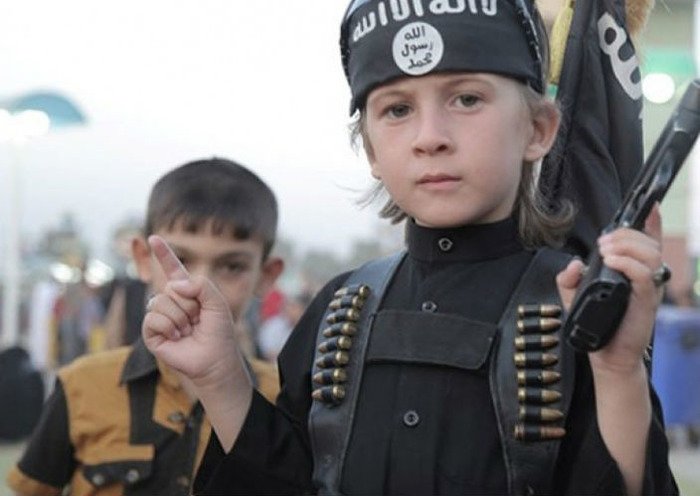
The Middle-East is often polemicized as an area embroiled in perpetual violence, with the orientalist sentiment “the Middle East has always been at war” unjustly imposed upon the people in this region. This narrative has persevered with the invasion of Iraq and the rise of the “Islamic” State of Iraq and Syria (hereinafter referred to as “Dawlat” or “Dawlat al-Islam”), with the country being painted as a hopeless region permeated by violence, radicalism and sectarianism. The purpose of this article is to challenge prevailing narratives and confront rhetoric with genuine human experience and fact. Following the battle of Mosul, the world celebrated the fall of Dawlat and breathed a sigh of relief – ‘We can finally leave’. What the coalition failed to predict was the tenacity of Dawlat ideology, fuelled by a minority of angry actors in Iraq. The collective failure of the coalition to analyse the rise of Dawlat and prevent the root of their rise to power has been a disaster for the state of Iraq and led to a generation of “Abandoned Iraqis”, a class disillusioned by their “liberation” and who suffer a silent plethora of human rights abuses often encouraged by state actors.
“BAQIA”
The literal meaning of this Arabic term is innocent, but for Dawlat, it is loaded with prophecy. The literal meaning of Baqia is “remaining”. It is the most prominent Dawlat slogan, constantly being repeated in their Nasheeds (Islamic Hymns) and their propaganda videos. It is an unflinching promise that the state will remain despite temporary adversity, and the fall of Mosul was merely a setback. Western pundits believed that the obsessive repetition of the term “Baqia” would be relegated to a historical footnote. However, unless the world thoroughly analyses the internal situation of Iraq, “Baqia” will continue to be hymned proudly by the disillusioned abandoned Iraqi following the battle of Mosul. The abandoned Iraqis were promised liberation yet they faced horrific oppression, forced disappearances, torture and rape, creating a new generation of people with nothing to lose and clinging onto the concept of “Baqiya”.
This article will explore the root cause behind the endurance of the concept of “Baqia”, and what the world can do to stop it. A silent bloodbath has systematically been occurring in Iraq, and without its termination, the world may once again recoil in fear at more atrocities in Iraq.
The Camps and Detention Facilities of Horror:
The fall of Mosul, rather than bring hope to the populace, brought death and destruction. The Sunni Muslims residing in Mosul, the Sunni triangle and the al-Anbar desert were vilified and oppressed by Hashd al-Shaabi (PMF) militias, and sectarian elements within the Iraqi state. The PMF are private militias formed by predominantly Shi’ite men to fight against Dawlat. They are backed militarily and structurally by Iran, and were trained by now deceased Qassem Soleimani, the head of the Iranian Al-Quds force. While they promised liberation to Sunnis unfortunate enough to remain in Dawlat territory, the PMF instead proceeded to go on a killing spree and enforced disappearances of thousands of Sunnis, irregardless of their role in Dawlat. The PMF has also opened camps where they detained alleged wives and children of Dawlat fighters. The PMF failed to distinguish between innocent civilians and Dawlat affiliates, and subjected unaffiliated women and children in camps and detention facilities to collective punishment. Despite scattered human rights reports on the conditions of these camps, the international community has largely overlooked them.
According to a survey conducted by Refugees International in Nineveh, Salah al-Din and Anbar, one of the key problems facing women and girls suspected of Dawlat connections was that they tended to be arrested and sexually abused by the Iraqi security forces and other authorities. According to another report, boys and men are frequently subject to sexual assault in a campaign of humiliation. Sunnis are often kidnapped from Shia majority areas in South Eastern Iraq, a region without a large Dawlat presence and are forced into camps. It has been 8 years since the fall of Dawlat, and large numbers of youth in these camps have made it to maturity. Their promise of dignity and revenge is echoed in the term Baqia – Dawlati Islami Baqia (The “Islamic” state shall remain). Radicalisation is the norm, and boys raised in these camps frequently carry out lone wolf attacks or seek out Dawlat cells.
The Role of the State:
The Iraqi state is complicit in allowing these camps to exist and frequently utilises them as political leverage. In addition, the sectarian nature of Iraqi political figures has led to systematic discrimination against Sunnis in the field of government bureaucracy, army participation and education. This state of events has not come out of a vacuum, the sectarian oppression of Sunnis by state forces have been prevalent since the fall of Saddam with Nouri al-Maliki, the ex prime minister, being a chief instigator. It is not a coincidence that Malikis iron fist policy and massacre of disillusioned protestors in central Iraq led to the swift rise of Dawlat. Furthermore, human rights groups had noted previous oppression of Sunnis by Iraqi security forces as a catalyst for the rise of Dawlat. By supporting and ignoring the disproportionate role of the PMF in Iraqi politics, the state has essentially given the PMF free reign to carry out gross human rights abuses.The state has created an increased number of disillusioned Sunni Iraqis by excluding them from government and politics, making them resort to the policy of the rifle.
The Role of Militias:
The PMF have been the prime mover behind the existence of these camps. They have also facilitated massacres and forced migration of Sunnis from the Shia heartland of Iraq (often derogatorily referred to as “Shrooq”). Thousands of Sunnis are forced from their homes and have faced systematic violence. They are often pushed to regions intentionally ignored by the Iraqi state due to the intentional lack of investment in the Sunni heartland, where a large number are unemployed. The PMF are backed by Iran who provides them with weapons and political support, and the PMF operate with impunity, resembling state-sanctioned gangs. The PMF has weaponised the use of rape and torture as a means of humiliation and a weapon in war, similar to the tactics of Serbian militias during the Bosnian genocide, and the Indian army in Kashmir.
A Glimmer of Hope in Kurdistan/Fallujah:
Unlike the areas under the authority of the PMF and the Iraqi state, Sunni refugees in Kurdistan do not face the same oppression. While their economic prospects are low, they retain relative security, apart from occasional racist attacks. Likewise, the city of Fallujah (Al Anbar province) has seen rapid economic growth, with some Iraqis suggesting it could be a new Dubai. The ideology of “Baqia” is rare, and relative self-governance, along with the lack of PMF presence has allowed the city to flourish. It seems evident that places with some autonomy and without the presence of unaccountable militias, supported by foreign powers, prosper more than mixed areas under PMF control. The success of Fallujah and other areas in Nineveh/Tikrit have prompted many Sunnis to call for a federal system which is a popular alternative to the ideology of Baqia, and provides a case study of success in contemporary Iraq.
The Psychology of the Abandoned Iraq and “Baqia”:
The glimmer of hope has receded from the minds of the children and women in camps and detention facilities. Life has been strife of humiliation and misery, first living under Dawlat and then subject to worse torture by the PMF. If the abandoned Iraqi is released from the camps, they are subject to unemployment and discrimination by PMF forces. In fact, simply having a Sunni name like Sufyan/Umar/Uthman is a legitimate reason for murder and torture. According to my sources in Iraq, who prefer to remain unnamed for safety purposes, even having a nasheed (Islamic hymn) on your phone is a justification for extrajudicial arrest. The abandoned Iraqi feels ignored and discriminated against purely for their religious affiliation. They feel as if they are backed into a corner with nowhere to go, and the only group that offers protection and revenge are Dawlat, who manipulate the genuine distress of young Iraqis. Baqia promises dignity and revenge, and in the words of Dawlat, “dignity can only be reclaimed by the bullet”. Children have been accustomed to violence and abuse, and their inability to get involved in civil society has made them seek alternative measures. The psychology of the abandoned Iraqi is heavily centred around women, who are often the most targeted victims. To reclaim the “Izzat” (honour) of their bereaved mothers and sisters, the abandoned Iraqi turns to the gun or the knife.
Baqia is a promise that their current situation is just a setback to their revolution, to their rise and their revenge. The abandoned Iraq has not forgotten the US invasion of Iraq – the catalyst behind their miseries. They see the massacres in Gaza by Israel with America’s complicity as evidence that the West and the international community have nothing to offer but moral hypocrisy and ignorance. Islamophobia and orientalist rhetoric by the west have backed the abandoned Iraq into a corner, where they feel that any action they take will be portrayed as irrational terrorism no matter if it is peaceful protest. The abandoned Iraqi feels that nobody has the moral right to tell them not to pick up arms, so they will fight in any manner that they see fit. As they do, they will be viewed as heroes and freedom fighters by many other Iraqis, and it is more than likely that a resurgence of Dawlat is imminent. Rather than oppose Dawlat like in the past, they will be seen as liberators, the men who protect the mothers and sisters. The brutality of the abandoned Iraqi, forced into the hands of Dawlat will be multi-fold and a shock for all.
Solutions:
The first step is to disband PMF militias. However, it is vital to not make the same mistake as the US when they disbanded the Ba’athist army and flooded the streets with unemployed men with military experience. Instead, a concerted effort should be made along the Iraqi state to carefully disarm these groups and wean them off of Iranian support. Next, the camps must be disbanded and the people rehabilitated. A federal system in Iraq could bring relative peace and security to the victims. An inclusive government must be formed with proper Sunni representation from both cities and tribal areas. The PMF must be listed as a terror organisation and a measure of laxity should not be applied to them purely due to their inclusion into the Iraqi state. More often than not, militant actors embedded in a nation state commit more brutality and terror than non-state actors, and they should be classified as terrorists the same as non-state actors like Dawlat.
Conclusion:
In conclusion, Iraq has become a powder-keg for the rise of extremist groups. Unless immediate action and rehabilitative measures are taken, a new generation of Iraqis, whether in camps or discriminated by sectarian governments, are primed for violence. The PMF and Iraqi state must be held to account for their crimes against humanity, and reparations and socio-economic gains for Sunnis, inspired by the successes in Fallujah must be encouraged. The camps should be immediately dismantled and a policy of reintegration should be implemented. Furthermore, the international community must pledge to be morally consistent and understanding. The abandoned Iraqis must be seen as human, as rational actors with genuine complaint. A large part of this is for the international community to retain moral consistency in conflicts close to the abandoned Iraqi’s heart – chiefly Gaza. Unless the international community, and indeed, the people of Iraq stand up for justice, Baqia will remain a solemn promise. Bloodshed will continue, and the oppressed people of Iraq will blame us for ignoring their cries. In such a scenario, we have nobody to blame but ourselves.
27/04/2024
- Ghurkan –
 Ghurkan Investigative Notes
Leave a comment