Introduction
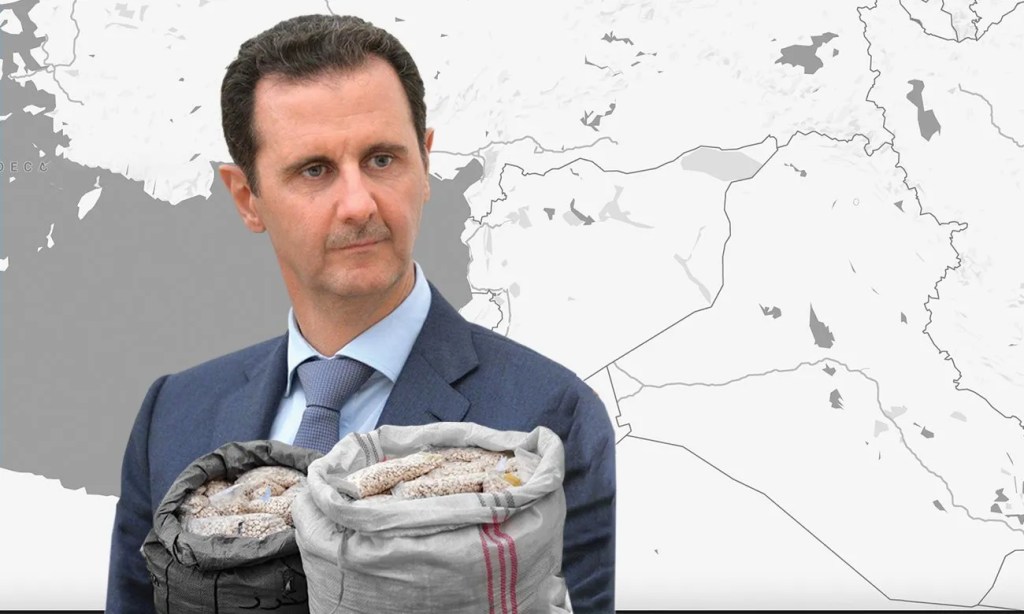
Following crippling sanctions against the Syrian regime under Bashar Al-Assad, the world has seen a terrifying uptick in the manufacturing and distribution of captagon. Captagon is a synthetic drug that was produced in Bulgaria in the 1990s, and its popularity and manufacture soon found its home in the Middle East. While production was relatively low during the 2000s, the Syrian Civil War led to a massive increase in both production and distribution. This trade has a significant impact on Syria’s economy, with the Syrian regime commonly referred to as a ‘narco-state’.The trade has emerged as a crucial factor in the foreign policy relations between the Assad regime and the Arab League. It is crucial to analyse the financial source behind Assad’s acquisition of internationally banned weapons such as cluster and barrel bombs used in the brutal bombing campaign against civilians, particularly in the Syrian province of Idlib. This blog post will delve into Assad’s role in the illicit captagon trade and tie the long-lasting consequences of the drug trade in Europe to demonstrate that captagon is an international issue that must be taken seriously by European nations.
Assad’s Role in the Captagon Trade
Captagon production in Syria is reportedly based in clandestine laboratories in Assad-controlled territory. The Syrian regime’s involvement has raised concerns about the extensive consequences of the Syrian Civil War. Experts argue that influential members of the regime, including the Assad family and other Alawite figures involved in governance and impacted by sanctions, have resorted to the illegal drug trade to fuel their personal wealth. Relation with Militant Groups in the Middle East Captagon trade has fueled transnational crime and empowered a variety of militant groups associated with Assad to adapt their financial strategy. Groups such as Hezbollah (otherwise referred to as Hezbalat by Syrian rebels) are contributors to captagon production and distribution. The militant group based in Lebanon has introduced the deadly drug into the country through their complicity with the Assad regime. Captagon provides an alternative source of revenue for Hezbollah to fuel its militant activities. Likewise, Shia militant groups such as the “Islamic resistance in Iraq” have also utilised captagon trade as a profitable venture. The transnational distribution of captagon is made easier by the “Corridor of the Axis” which stretches from Iran through Iraq to Syria, providing a safety network for distribution.
Syria’s Relations with the Arab League
The Assad regime’s involvement in captagon trade plays an underreported role in its relations with the Arab League. The League (consisting of 22 member states) has been exceptionally vocal in its condemnation of the illicit drug trade, with Saudi Arabia listing the ceasing of its production as a demand for the reintegration of Syria into the Arab League. Impact on Europe The repercussions of captagon trade extend beyond the Middle East, impacting Europe as well. The drug is trafficked through various routes, with Europe being a significant destination market. The influx of captagon into European countries has posed challenges for law enforcement agencies and contributed to broader discussions on transnational crime and drug trafficking. Moreover, the link between the Assad regime and captagon trade has raised concerns about its potential implications for European security and stability. The involvement of a state actor in such illicit activities has underscored the complex nexus between regional conflicts, organised crime, and global security, prompting European nations to reassess their approach to addressing the multifaceted challenges posed by the Syrian conflict. As a result, Europe has been severely impacted by captagon trade. This deadly captagon influx has presented a variety of challenges for law enforcement agencies and has contributed to broader discussions on transnational policing and drug trafficking. The involvement of a state actor in illicit drug trafficking has underscored Europe’s deep suspicion of Assad. It has also highlighted the nexus between organised crime, regional conflicts, humanitarian aid and global security.
Conclusion
The Assad regime’s role in the captagon trade has far-reaching implications, impacting foreign relations in the Middle East, Syria’s standing within the Arab League, and Europe’s security concerns. Addressing this multi-dimensional issue requires a coordinated approach that involves diplomatic efforts, law enforcement collaboration, and global dialogue. The complexities surrounding the captagon trade underscore the interconnected nature of global challenges and the imperative of concerted international action to address them. Combatting the captagon trade requires a synchronised approach involving international law agencies, a reassessment of Europe’s priorities with Middle Eastern states, and global dialogue. The complexities surrounding the Syrian regime and militant groups in Iraq and Lebanon peddling captagon underscore the need to view regional conflicts as international. This case provides an example of multi-continental state actors and non-state actors engaging in criminal activity, and provides policymakers with an ever-important challenge. Successful tactics in combating the captagon trade can also be applied elsewhere; therefore, it is imperative for young policymakers and international organisations to collaborate in order to solve the captagon epidemic.
01/02/2024 – Ghurkan –
 Ghurkan Investigative Notes
Leave a comment