From 1998 to 1999, one of the bloodiest wars in modern Europe occurred in the territories consisting of ex-Yugoslavia. The Kosovo War was underpinned by the Yugoslavian army’s policy of committing war-crimes against the ethnic Albanian population to keep them under the Serbian led state of Yugoslavia. Consistent war crimes and an aggravated militant situation in Europe’s borders led to the intervention of NATO forces and the de facto independence of Kosovo – ratified in 2008 when Kosovo subsequently declared independence – a declaration that Serbia, the successor of Yugoslavia refutes. The Serbian government continue to claim Kosovo as part of greater Serbia, and staunchly denounce Kosovo’s existence as a sovereign state disregarding Kosovo’s acceptance as a by over 100 countries. It is from this background that we must analyse the current happenings in Kosovo.
Tensions have been endemic since Kosovo’s declaration of independence, with consistent threats provided Serbia. These range from the glorification of convicted Serbian war criminals, many of whom have engaged in massacres of ethnic Albanian civilians. Tension has risen since 2022, often involving Serbian practical military action and political rhetoric regarding the ethnic Serbs residing in Kosovo. It has been characterised by the arrest of local leaders such as Milun Milenković – a Serbian leader accused of spearheading riots which left several Kosovar police members injured. Similarly, the consistent increase in checkpoints in Kosovo showcased Kosovo’s willingness to act against ethnic Serbs who are increasingly being viewed as subversive to the state of Kosovo.
The recent terrorist attack on Albanian soil can be viewed as the continuation of a common trend of Serbian aggression against a sovereign state recognised by majority of NATO.
The “Banjska” attack occurred on the 23rd of September and carried over onto the 24th of September. An armed group of approximately 30 Serbs injured 3 Kosovar policemen with one succumbing to his injuries.
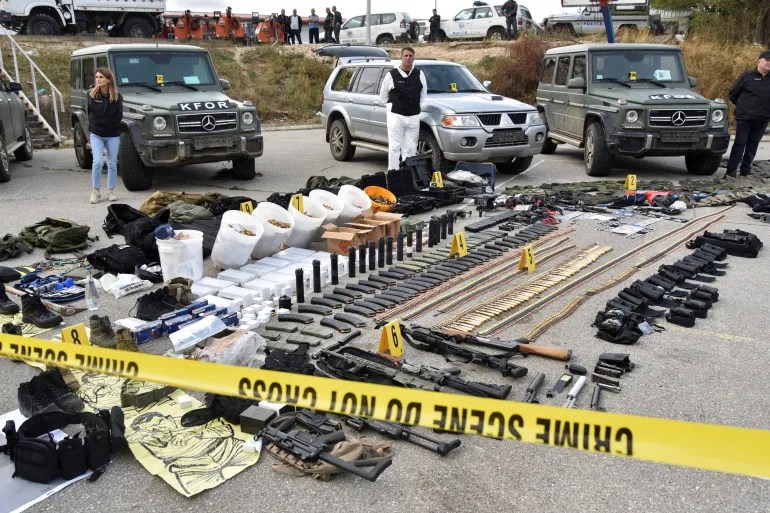
As a response, the Kosovo police force led an attack against the 30 gunmen who had taken refuge within the Banjska monastery. The siege lasted many hours with 2 Serbian gunmen dead, 8 captured, 2-6 injured, and the capture of a cache of weapons, with the remaining militants fleeing to Serbia.
The aftermath of this event has been profound. Tensions have increased, with Serbia and Kosovo both increasing the size of their military and increasing the number of border guards. Fears of a Serbian attempt to create a base in Kosovo, along with alleged state support of members of the Serbian government have been strife. Serbian state sponsorship of terrorism within Kosovo’s sovereign borders seems evident, considering the arrest of Milan Radoicic’s who admitted responsibility behind the Banjska attack. While Radoicic’s lawyer strongly affirms that this was a lone wolf attack to rile up Serbian resistance within Kosovo, special attention must be paid to the actions of other Serbian politicians who espouse ultra-nationalist, pan-Serbian ideals.
The EU has accepted this attack as a terrorist attack in Kosovo’s sovereign territory, but without a conceited and well organised investigation by European institutions such as the ICC, a message is sent to Serbian ultra-nationalists that they can continue to do as they please with relative impunity.
Jens Stoltenberg – the NATO Secretary-General has expressed his concern over the recent terrorist attack, and assures a readiness to preserve peace in Kosovo, but once the question must be put forward – is lip service enough?
The Russo-Ukrainian war rages on yet it is of paramount importance to put a check on the aggressive actions of Serbia by the EU and NATO. Peace in the Balkans is peace in Europe, and a strong European response is the solution for a safer Europe.
–Zen Ghurkan (08/10/2023)
 Ghurkan Investigative Notes
Leave a comment