Introduction
The plight of Uyghur Muslims in China’s Xinjiang province (widely referred to as East Turkestan by Uyghurs) has recently gained international attention and support. According to the independent Tribunal in London, and multiple parliamentary and governments Uyghur Muslims are undergoing a genocide perpetrated by the Chinese government. The atrocities they face have led to forced displacement and escape, creating a large diaspora scattered around the globe. This article delves into the challenges and opportunities faced by the Uyghur diaspora in their eminent quest for justice. This article will explore the particulars of the Uyghur diaspora, such as their history, culture, their tireless campaigns and more importantly, their human experiences. The role of international institutions such as the UN, International Court of Justice (ICJ), governments and other human rights organisations in advocating for human rights shall also be explored and elaborated.
This article explores the dynamics of diaspora communities with a focus on the Uyghur community’s resilient struggle against adversity. It highlights the importance of solidarity among oppressed diasporas and the potential for overcoming challenges together. Advocating for active engagement, the piece emphasises the significance of raising awareness, offering support, and taking legal action to aid these communities in their quest for justice, committing to contributing towards these endeavours.
History of the Uyghur Diaspora
Understanding and empathising with the struggles of the Uyghur diaspora requires an examination of the historical context and persecution in East Turkestan. The region of East Turkestan, known today as the Xinjiang Uyghur Autonomous Region in northwest China, has a rich history, dating back to over a thousand years, and hosts great cultural diversity. This region, cradled with vast deserts and towering mountain ranges, has been a crossroads for civilizations, cultures, and trade routes, owing to its strategic location on the Silk Road. The history of East Turkestan is marked by the rise and fall of various empires, from the ancient Kingdom of Khotan to the rule of the Turkic Uyghurs and the influence of the Mongol Empire. This has left an incredible mark on the region’s cultural heritage as seen in its architecture, language and traditions. Culturally, East Turkestan is a mosaic of ethnic groups, including Uyghur, Kazakh, Kyrgyz, Tajik, Pamiri, Hui and many more. Religion has played a significant role in shaping the cultural identity of East Turkestan. Islam, Manichaeism, Tengrism, and Buddhism have coexisted and influenced the social fabric of the region. The Islamic influence is particularly evident in the beautiful mosques and madrasas that dot the landscape, as well as in the celebration of Muslim festivals and customs. Unfortunately, tensions between the Chinese government and the Muslim Uyghur population have escalated rapidly in recent decades. It is vital to note that the Uyghur population has been subjected to discrimination and oppression for over a century. Oppression never exists in a vacuum. They have been subjected to abuse for many reasons, chiefly their religion and ethnic identity as Turks, along with the strategic location of East Turkestan in the Chinese belt and road initiative. Genocidal policies such as restrictions on religious practices, mass internment in “re-education” camps, forced labour, mass surveillance, birth rate suppression, forced sterilisations, abortions, forced marriage and the desecration of Uyghur culture have been especially prominent in the last few decades with the premiership of Xi Jingping. These actions forced many Uyghurs to flee their homeland in the hope of retaining their lives, religion, culture, and dignity. Uyghurs have migrated to a diverse range of places, including Central Asia, Turkey, Pakistan, and the wider Anglo region.
Understanding the Diaspora
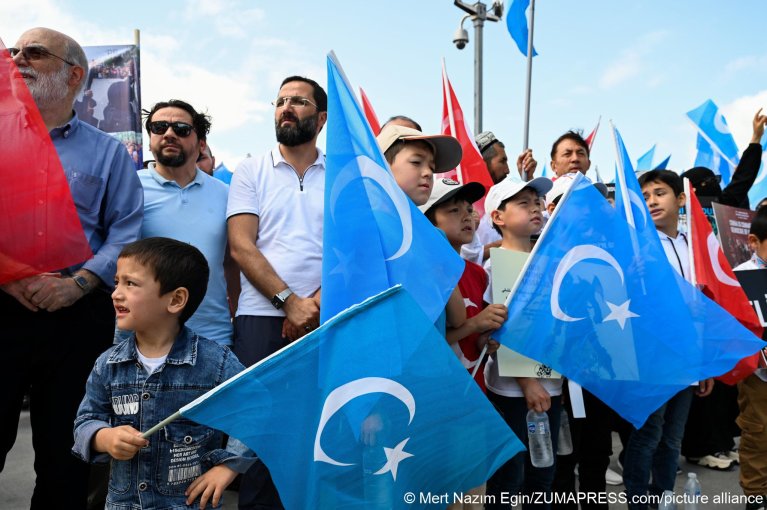
The diversity of the Uyghur diaspora is of great relevance, as it allows us to appreciate and recognise that the diaspora is not monolithic. The diaspora consists of a tapestry of individuals from different socioeconomic backgrounds, professions, and ideologies. Diaspora communities face a multifaceted range of societal issues, including the trauma of forced separation from their families, the fear of reprisals against family members, and discrimination. Members of the diaspora retain ties of kinship back home, and their family members are subject to surveillance, making these ties difficult to maintain and creating a harrowing sense of insecurity. They often face difficulties adapting and integrating due to potential language barriers and cultural differences. Nevertheless, the Uyghur diaspora has shown incredible resilience and unity. The diaspora has organised itself into a myriad of organisations and networks to advocate for Uyghur rights, raise awareness of the situation in East Turkestan, and provide legal assistance and resources for other members of the diaspora. These are conducted in the form of protests, social media campaigns, and workshops. An especially worrying form of trauma that must be emphasised is reprisal attacks by the Chinese government. Family members of Uyghur diaspora activists have been subjected to kidnapping, torture, and forced disappearance by the Chinese government in the form of collective punishment. Continuing to speak out while in constant fear of one’s family is a noble act, and the international community holds responsibility for preventing retaliatory attacks in the first place.
International Institutions and their role in addressing the Uyghur crisis
The United Nations (UN) and various international organisations have played a vital role in addressing the Uyghur crisis in public forums. Such institutions have an international mandate and responsibility for protecting humans from abuse, making them essential for the Uyghur diaspora. NGOs like Human Rights Watch (HRW) and Amnesty International have played a crucial role in documenting abuses and advocating for legal justice. Other independent NGOs, such as the Australian Strategic Policy Institute, have released papers documenting forced labour and forced sterilisation, and have worked with scholars such as Adrian Zenz (who released an unprecedented number of leaked documents exposing internment camps in East Turkestan known as the Xinjiang police files) in raising awareness. Such institutions have the power and prestige to exert pressure on China through a variety of channels, including diplomatic pressure, sanctions, and international legal mechanisms. Likewise, they also collaborate with Uyghur diaspora groups affiliated with the World Uyghur Congress, an umbrella organisation dedicated to preserving Uyghur heritage and lobbying for positive change.
A variety of prominent international bodies and governments have officially recognised the treatment of Uyghurs as a genocide. These include the US (under both the Trump and Biden administrations) and the Canadian and Dutch parliaments, both of which have made formal genocide declarations. The United Kingdom’s parliament has also seen members advocating for recognition, providing hope that the United Kingdom will follow their example. The Holocaust Museum has acknowledged the situation facing the Uyghurs as constituting a genocide. Acknowledgement from global respected institutions adds a profound moral weight to calls for action.
However, the effectiveness of institutions such as the United Nations has been harshly hindered. The UN lacks the capacity to enforce human rights standards owing to the composition of its Security Council, where China, as a permanent member, can easily veto any action that opposes China. This allows China to dilute criticism aimed at investigating or preventing atrocities. Additionally, China’s increased economic influence enables it to exert diplomatic and economic pressure on human rights violations. By utilising their significant economic and diplomatic clout and remaining a permanent member of the Security Council, international bodies’ ability to act decisively is heavily curtailed.
The Uyghur diasporas efforts and campaigns
Uyghur diaspora organisations have been at the forefront of seeking justice and raising awareness holistically. Many of these organisations work in tandem with international organisations and engage in grassroots development. An example of an especially proficient and determined organisation is one that I am personally associated with, providing me with keen insight. Campaign for Uyghurs (CFU) nonprofit, founded by Rushan Abbas, engages in a multifaceted approach by utilising various means at their disposal. They are involved in social media campaigns linked to in-person protest movements such as the “Stand with Uyghurs” and “Free Uyghur” campaigns. In addition, they work closely with NGOs and scholars of conscience, such as the esteemed Adrian Zenz. The CFU supported the passage of the Uyghur Human Rights Policy Act (2020) and the Uyghur Forced Labor Prevention (2021). The CFU cooperates closely with other Uyghur organisations with international ties in an appeal for justice, such as the recent protests in Geneva on January 23rd alongside Tibetan communities. The CFU and similar organisations have been trailblazers in their focus on intersectionality and empowering Uyghur women and youth by organising advocacy training workshops. CFU workshops aim to empower the Uyghur diaspora through educational localised workshops specialising in youth leadership programs. These workshops cover an array of topics and are intersectional in nature. Examples of taught fields include digital campaigning, youth advocacy, environment, feminism and the psychological impact of genocide, especially with women who are often the primary victims. Following a number of simulated campaigns, activists and students are encouraged to put their training into practice. In addition, CFU has made strides in preserving Uyghur culture online and in person. Their actions have affirmed that Uyghur culture will always be etched into history, and can never truly be displaced by the Chinese government.
What lies ahead?
The achievements and actions of the Uyghur diaspora are many, and it seems that their struggles have made a clear observable impact. Global networks have been formed by a scattered group of people and have left their marks on world governments and international institutions. Unfortunately, there are various hurdles facing the Uyghur community. The most vital hurdle is the UN’s inability to hold China accountable. China is protected by its permanent presence in the UN Security Council and its ability to exert its economic leverage to influence other countries to reject any votes called in the UN to scrutinise and prevent China from committing acts of genocide. Despite exile, discrimination, and fear of reprisals, the Uyghur diaspora has remained firm in its commitment for justice. This article aims to educate and encourage others to research the diaspora dynamics of multiple communities, particularly the Uyghur community. The Uyghur struggle gives policymakers and people of conscience the image of Sisyphus, a firm man with an impossible task. However, the Uyghur diaspora has provided concrete evidence of hope and justice. By connecting different diasporas of oppressed people in similar situations, it is completely possible to overcome the fate of Sisyphus. It is now our job as future leaders to communicate and interact with diaspora groups seeking justice. This could involve following social media pages, spreading awareness, donating, or engaging in legal action. It is my firm intention to engage in such projects and provide solutions too.
“Awareness without action is a misdemeanour to justice.”
sources:
15/02/2024 – Ghurkan –
 Ghurkan Investigative Notes
Leave a comment