The genocide in Gaza has manifested itself through various geopolitical shifts in the Middle East. Analysts and government officials have consistently warned of regional war between various nation states holding a direct stake in the conflict. Chief among these is the state of Iran and its various proxies in Southern Lebanon, Syria, and Iraq. Following the US invasion of Iraq, Iran has steadily created a mass of scattered proxies in each of these countries in order to spread its influence and manage supply routes from Tehran to the Mediterranean. Through its control of the non-state militant groups, Hizballah, Liwa Fatmeiyoun, Liwa Zainabeyoun and multiple factions of the Iraqi Hashd Al-Shaabi (PMF), Iran has formed an axis to supposedly attack Israel and defend the Shi’ite faith. This article will provide a list of Iranian proxies loyal to the ideology of Wilayat-e-Faqih and analyse their movements in relation to their loyalty to the IRGC’s commands.
What is Wilayat e Faqih (WEF):
Wilayat e Faqih, (Guardianship of the Jurist) is an ideology rooted in the tradition of Twelver Shia Islam. The Twelver Shia sect is distinct from the predominant Sunni sect in its political and theological aspirations. Sunni theology asserts that the successors of the Prophet Muhammed (SAW) follow a legitimate line from the Prophet’s companion – Abu Bakr, and his successors. They view Abu Bakr, his successor Umar, following him Uthman, and finally Ali as the rightly guided caliphs (leaders and successors). The Twelver Shia faith rejects this line of succession and affirms Ali, the son in law of the prophet as the rightful Caliph of the Muslims. In this way, they denounce the rule of Abu Bakr, Umar and Uthman as unjust, labelling them usurpers and traitors to the Prophets commands, which they base off their own Hadith (Prophetic tradition). Following the death of Ali, they claim that Wilayat (trusteeship) passed on to his son Hasan, then Hussein, and then his descendants, culminating in the 12th final Imam known as Imam Mehdi (also the Messiah). They claim that Imam Mehdi was a secret child of Hasan al-Askari, the 11th Imam, and is hidden away in occultation until he will emerge to fight the Dajjal (Anti-Christ). Traditional Shi’a theology is apolitical. Similar to the beliefs of a substantial portion of the Haredi Jewish movement in their rejection of a Jewish state prior to the Messiah, they believe that the establishment of Shi’a state should not be pursued until the Mehdi arrives. WEF represents a dramatic shift from traditional Twelver Shi’ism. It purports that a Shi’ite state is a requirement until the arrival of the Mehdi. Until the Mehdi arises, political control should be given to the chief Jurist, or, the Supreme Leader, who would fulfil the roles of an Imam until the Mehdi finally appears. The Supreme Leader holds religious and political authority for all Shias who submit to Wilayat e Faqih, it transcends national boundaries and gains support from Twelver Shias from a variety of countries. Submitting to WEF and the Supreme Leader often manifests itself in the forming of militant groups which proclaim loyalty to receive financial support and military backing. Of vital importance is that WEF is not a wholesale representation of Twelver Shi’ism. Prominent Shi’ite authorities, such as Ali al-Sistani and Muqtada As-Sadr, both based in Najaf, reject the authority of WEF. This does not mean that said groups reject followers of IRGC considering their mutual interaction. For example, as-Sadr and al-Sistani have collaborated with the Ayatollahs of Iran previously and continue to do so.
IRGC:
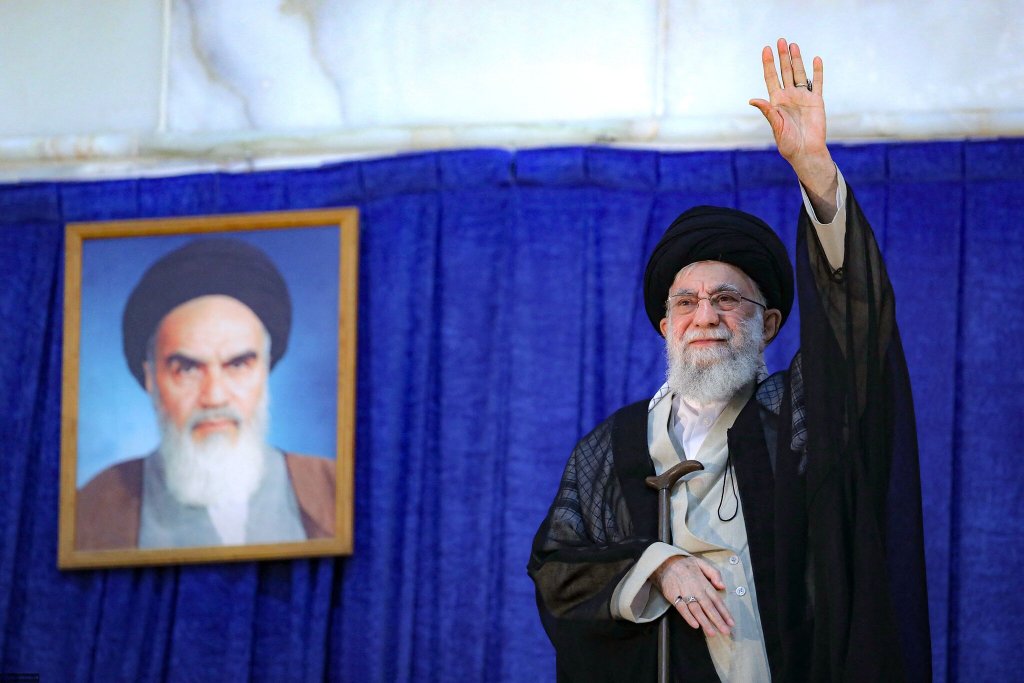
The IRGC is the main military and political apparatus of the Wilayat e Faqih. It is led by the Supreme Leader Ayatollah Khamanei, who took over from the first Ayatollah Khomeini following his 10-year rule spanning 1979-1989. It maintains direct control over its proxies through the Quds Force, the intelligence branch of the IRGC and provides military, logistic, and intelligence to WEF aligned groups. Groups loyal to WEF follow IRGC orders and move into different nation states for IRGC political purposes as they see fit. They oversee a transnational network of WEF affiliated groups as follows:
Lebanon: Hezbollah:
Hezbollah is a Shi’ite militia group that operates from Shia majority South Lebanon. They were formed in 1982 as a result of Israel’s aggressive invasion of Lebanon under the guidance and support of Iran. Their relationship with WEF ranges from pragmatic alliance to submission. Hassan Nasrallah, the leader of Hezbollah until his assassination by Israel has stated firmly that Hezbollah subscribes to WEF. It is a rallying point for Hezbollah’s relationship with Iran, and affirms that the Shias of South Lebanon look to the Supreme Leader for political guidance. Pragmatism is required to reconcile its image as an independent Lebanese group with its submission to the policies of a foreign leader and his foreign nation state. In this way, Nasrallah has staunchly defended WEF while insisting that it is not necessarily tied to Iran. Ultimately, it is synonymous with Iranian control over the actions of Hezbollah. They followed Supreme Leader Khomeini’s orders to attack Iran’s enemies in 1986, where they hijacked Iraqi Airways Flight 163 at the behest of Iran to inflict a blow against Saddam Hussein’s Iraq, at the time at war with Iran. With Iranian encouragement under the Supreme Leader Khamanei, they have entered into Syria on the side of president Bashar al-Assad.
Afghanistan: Liwa Fatmeiyoun (LF):
LF consists of WEF aligned fighters hailing from Afghanistan. The predominant demographic present in LF are members of the Hazara ethnic group, typically from Central Afghanistan. The Hazara people differ from the majority of Afghans (Of Iranic origin) via their ethnic identity (Of Turco Mongol origin) and religious identity. Majority of Afghans practice Sunni Islam while the Hazaras traditionally follow Twelver Shi’ism. Hazara’s have historically faced discrimination in Afghanistan for their minority status. Iran has utilised the massive Hazara refugee population in Iran to form a transnational militant group that operates across Syria, Lebanon and Iraq. LF has mobilised to support the Assad regime in Syria under the guise of safeguarding Shi’ite holy shrines, i.e. Sayyidah Zaynab shrine near Damascus from groups deemed as Wahhabi Sunni Extremists by Iran. In the past year, many LF fighters have been recalled from Syria and sent to fight Baluchi separatist groups in the Iranian province of Sistan-Baluchistan.
Pakistan: Liwa Zainabeyoun (LZ):
LZ consists of WEF aligned fighters mostly hailing from the region of Parachinar – Khurram district in the Khyber Pakhtunkhwa (KPK) province in Northwestern Pakistan. The Khurram district is tribal, mountainous and treacherous. It was previously part of the Federally Administered Tribal Areas (FATA), which used to be a semi-autonomous region in Northwestern Pakistan before being subsumed in the KPK province in 2018. The ethnic makeup of Parachinar tribes is predominantly Pashtuns of the Turi tribe. Being from ex-FATA and owing to their Pashtun heritage, the Shias of Parachinar maintain a strong reputation of belonging to a martial race. Due to increased sectarianism in the region and Iran’s promise of protection, Iranian residency and financial support, many youths from Parachinar joined LZ and ventured into Syria. Assad and Iran have also facilitated settlement of members of LZ into regions in Eastern Syria and around Aleppo, recently evicting 50 houses in al-Mayadeen in an attempt to ethnically shift Syria’s demographic. By creating an uninterrupted zone from Iran, through Iraq to Syria, Iran can easily facilitate weapons transfer to its allies Hezbollah and Assad to gain access to the Mediterranean Sea through the coastal Alawite dominated regions surrounding Latakia and Tartus provinces.
Iraq:
Iran retains a firm hold on many Iraqi Shi’ite militias following the 2003 invasion of Iraq. WEF Shi’ite groups have now officially become part of Iraqi security apparatus through a 2016 parliamentary law. Iran aligned Shi’ite militias first gained state sanction in 2014 following the rise of ISIS and its capture of Mosul. The Iraqi security apparatus had proven itself to be incompetent and unable to combat ISIS, facing sound defeats and suffering massacres (the most prominent being Speicher camp). As a result, pre-existing Shi’ite militias aligned with Iran gained popularity as a competent alternative that was less corrupt and appealed to the Shi’ite population through sectarian imagery. They were empowered with the 2014 fatwa of Grand Ayatollah Ali al-Sistanis encouraging volunteers to join the fight against ISIS. In the absence of an organised and functional Iraqi military and al-Sistani’s vague phrasing, masses of young Shia men joined Iran aligned Shi’ite militias. They were guided by Qassem Soleimani – previous head of the Iranian Quds force, and were incorporated in the official Iraqi security apparatus due to their integral work in defeating ISIS. PMF has popular support from Iraqi Shias, and were deemed a military necessity owing to the breakdown of the Iraqi army. Iraqi statesmen feared that if PMF militias were left independent, they would fragment and engage in infighting, eventually posing a threat to the state. The following five groups are the most prominent groups in the PMF loyal to Iran. They actively attack America, and cease attacks under Iran’s discretion. Each have been implicated in committing war crimes against the Sunni population and all subscribe to the WEF. Many have sent fighters to fight alongside Assad in Syria. In the past few months since Israel’s aggressive invasion of South Lebanon, Iraqi fighters have fought on the front lines.
Kata’ib Hezbollah (KH):
Kata’ib Hezbollah was established in 2007 as a splinter group of the Mahdi army, led by Muqtada Al-Sadr. The Mahdi army was a Shi’ite militia opposed to the U.S. invasion and occupation of Iraq. Al-Sadr remained more passive to the American occupation, and spoke more than he acted. He followed a Shia form of Iraqi Nationalism and opposed Iranian influence on Iraq. While he did lead attacks against the USA, it was evidently not enough for a large number of his followers. Hardliners with closer ties to Iran defected and formed KH, and received funds and training from Qassem Soleimani. KH’s primary goal was to target the U.S. military apparatus in Iraq by conducting guerilla warfare operations. KH responded to Grand Ayatollah al-Sistani in 2014 and worked alongside Soleimani and the U.S (their previous enemy) against ISIS. Following the capture of Mosul and the 2016 PMF act, they officially joined the PMF while retaining relative autonomy and continued collaboration with Iran. After the defeat of ISIS, they have ramped up attacks against U.S. positions in Iraq. KH joined Assad during the civil war under the guise of protecting Shi’ite holy shrines such as the Sayyida Zaynab Shrine in Damascus. They have been implicated with conducting sex trafficking of Sunni Iraqi women and numerous war crimes against Sunnis in Syria.
Asa’ib Ahl Al-Haqq (AAH):
AAH was established in 2006, also as a splinter group from the Mahdi army. Its founders, including Qais al-Khazali favoured a hardline pro-Iran approach. AAH also received training and support from Qassem Soleimani and followed KH’s trajectory. AAH fought against the US occupation until the rise of ISIS, where they fought alongside the US against ISIS, before being absorbed into state PMF and restarting their attacks on US targets. AAH, like KH, also joined Assad in the Syrian civil war and have been implicated in war crimes against Syrian and Iraqi Sunni civilians.
Harakat Al-Nujaba (HAN):
HAN was established in 2013 as a splinter group from AAH. Unlike AAH and KH, HAN was established as a consequence of the Syrian civil war and the rise of ISIS. Akram al-Kaabi, who became the leader of HAN, prioritised firmer cooperation with Iran. Kaabi disagreed with AAH about the level of commitment to the Syria front, and split from AAH to prioritise the defence of Assad. They participated in the Syrian civil war alongside Assad in defence of the Sayyida Zaynab Shrine in Damascus. HAN worked alongside the US in the fight against ISIS, was state sanctioned after the 2016 parliamentary act, and returned to being antagonistic against the US.
Saraya Al-Khorasani (SAK):
SAK was founded in 2013 with direct help from Iran. They are the one of the most overtly pro-Iranian groups in the PMF. They have followed the same trajectory as the other groups
Badr Organization (BO):
The Badr organisation differs from the others in that it is far older and more established. Originally known as the Badr Brigade, they were formed in 1982 as the military wing for the Supreme Council of the Islamic Revolution in Iraq (SCIRI), a Shi’ite political group which opposed Saddam Hussein. The Badr Brigade sided with Iran in the Iran-Iraq war and acted as a proxy, fighting side by side with Iran against Saddam. Following the Iran-Iraq war, they fought in the 1991 Shia rebellion against Saddam and lost, leading to many of its fighters fleeing to Iran or operating clandestinely. After the 2003 invasion of Iraq, they returned and sided with the US. Abdul Aziz al-Hakim, the leader of the SCIRI following his brother’s assassination in 2003, was the President of the Governing Council of Iraq. Through him, BO was able to infiltrate the Ministry of Interior, and by default, the police forces and security units. BO used their newfound power to run death squads targeting Sunni’s indiscriminately. By utilizing control of checkpoints, they were able to frequently torture Sunni’s, and were implicated in many cases of sexual assault and extrajudicial killings. They also helped lead the effort to ethnically cleanse Sunnis from Baghdad neighbourhoods and South East Iraq alongside the Mehdi army. Unlike the other groups, BO integrated into Iraqi politics and participated in the electoral process. Following the battle of Mosul and the reliance on Shia militias, BO became a leading faction in the PMF. They were implicated for multiple cases of abuses against Sunni civilians in areas reclaimed from ISIS. Unlike the aforementioned groups, BO does not routinely attack US military forces. It is cemented in Iraqi politics and aims to spread Iran’s influence through political means. Their political role allows them to shield the aforementioned PMF groups from too much scrutiny considering their shared position in subscribing to WEF.
Implications:
The disproportional impact of Wilayat e Faqih in deciding the foreign policy of the myriads of armed actors loyal to it has sent a shockwave to Sunnis residing within WEF active regions. The situation has substantially increased sectarianism in Iraq, Syria and Lebanon from Sunni groups who believe that the IRGC aims to subsume Sunnis and maintain Shi’ite supremacy. A prevailing belief exists that the IRGC aims to expand its empire using WEF to attack and remove the authority of the Sunni people. Disproportionate war crimes committed by WEF aligned groups against Sunni populations exacerbate Sunni sectarianism. In Syria, Hezbollah, LF and LZ have committed multiple massacres and rapes against the Sunni population. They have been involved in forced displacement of civilians and have migrated to deserted villages and towns in an attempt to ethnically change regions of “useful Syria”. Sunnis view these actions as a conceited conspiracy of Iran to forcefully demographically cleanse Syrian areas of Sunnis. Similarly, Hezbollah have discriminated against Sunnis in Lebanon, attacking them and stealing Sunni Waqf (endowments). Hezbollah has publicly recorded scores of their war crimes against Sunnis and frequently upload them to the internet in an attempt to humiliate Syrians. Assad’s and his followers, the man who Iran has sent Shias from Iraq to Afghanistan to Pakistan to protect, record the Syrians they have tortured to death along with their ID’s and body tags. The SAA (Syrian Arab Army) and the Shabiha (Alawite militants) record and upload their war crimes on social media, chiefly telegram, facebook and twitter. These include the destruction and desecration of Sunni mosques, torturing the elderly and children and horrific acts of sexual violence. WEF aligned militias in Iraq have displaced thousands of Sunnis from South-East Iraq and have committed mass war crimes against Sunni populations. PMF groups run sex trafficking rings and commit daily abuses against widows and children in camps.
Sectarianism in Iraq, Syria and Lebanon has steadily increased post 2003 and has reached a grander scale. It is no longer a coincidence for a displaced Syrian that his displacers originate from five different countries.
A portion of Sunnis in Syria, Iraq, Lebanon now view it as a religious war. During the Iran-Iraq war, Saddam’s army was mostly made up of Shias loyal to Iraq, it was not a religious war, but a national one, and relations between Iraqi Sunnis and Shias were relatively warm. The Syrian civil war was much less sectarian in nature at the beginning. Rebels focused on deposing Assad rather than attacking Shias and Alawites. This changed rapidly once Iran and its WEF aligned militias joined. The leaders of extreme Sunni groups opposed sectarian infighting in Iraq from the get go. Ayman al-Zawahiri sent a letter to Abu Musab Zarqawi, head of AQ in Iraq (AQI) commanding him to stop attacking Shia sites. Two of the most important and effective Iraqi insurgent groups, Islamic Army in Iraq (IAI) and Army of the Men of the Naqshbandi Order (JRTN) completely opposed sectarian killings and directly fought AQI. Following the war crimes of WEF aligned groups under the name of Shia Islam, many of these groups have also become increasingly sectarian. The recently resurrected IAI uploaded its first propaganda video threatening to attack Khamanei for example.
Iran’s actions have disillusioned a large number of Palestinians. Their popularity in Gaza is low, and members of Hamas have previously come out in support of the Syrian revolutionaries. As a consequence, Iran cut funding for Hamas and attempted to create a Shia group in Gaza it could control (Shias have almost no presence in Gaza). Members of Al-Qassam brigades, the armed wing of Hamas, and the Popular Resistance Committees (PRC) have been more outspoken in their distaste for Iran and WEF groups. Co-operation continues out of pragmatism.
Regional conflict continues to grow and evolve. With the Syrian civil war still in effect, US strikes on PMF positions in Iraq and Israel’s invasion of South Lebanon, it is possible that the nature of WEF could change, considering that militant groups, out of pragmatism and desire for survival may reject blindly following Iran. It is also possible that the slow decline in strength of WEF aligned forces could empower Sunni groups. It is doubtful that this would reduce strain on Israel considering the shared hatred Sunni and Shia groups have for Israel.
 Ghurkan Investigative Notes
Leave a comment